
Loading...
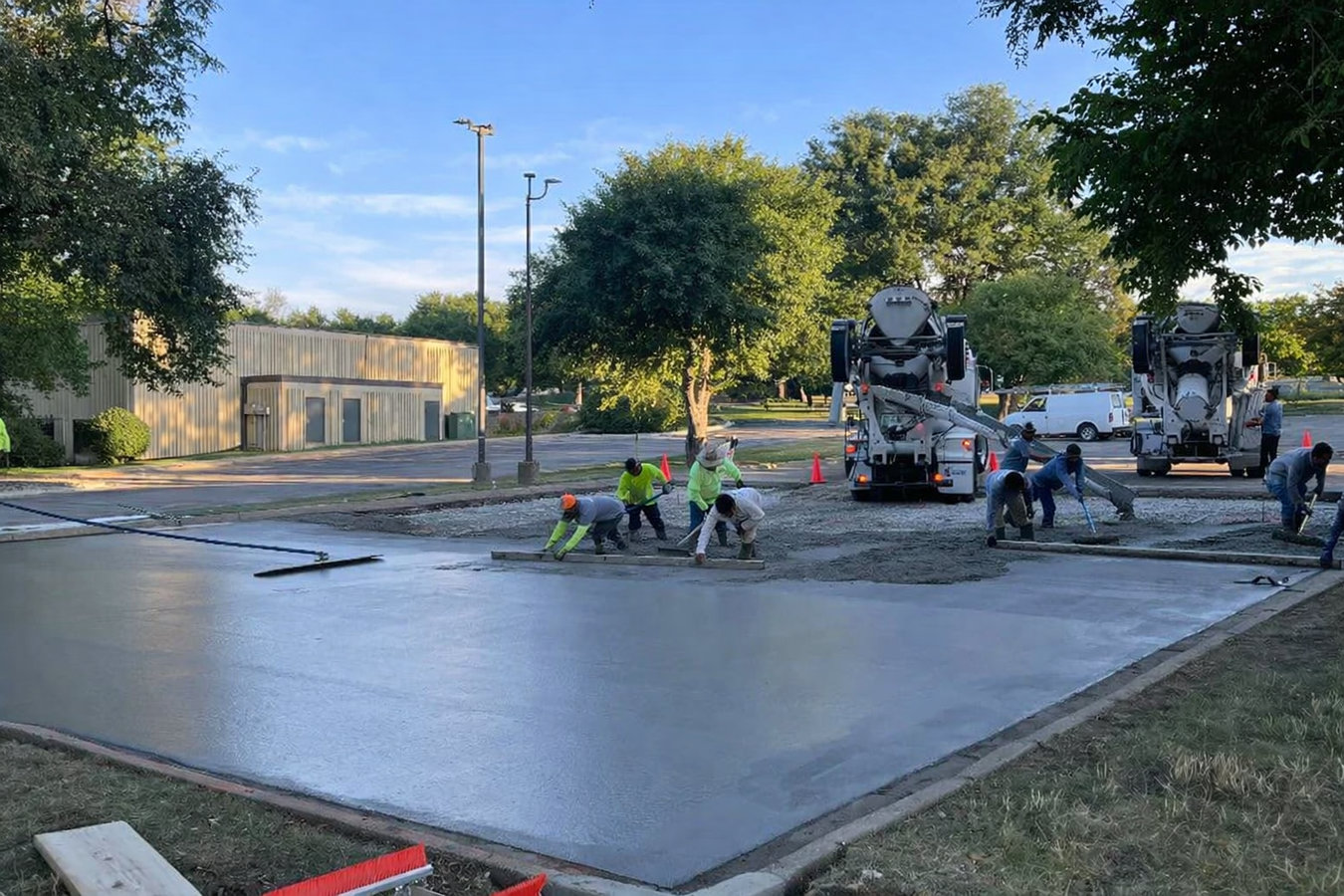
Patching the same cracks every spring is not a solution. We build concrete parking lots in Manchester with the base depth, drainage, and joint work that Connecticut winters actually demand.
Concrete parking lot building in Manchester, CT means excavating the existing surface, compacting a gravel base of 6 to 8 inches, pouring a reinforced concrete slab graded for drainage, and cutting control joints before the concrete fully hardens - most residential and small commercial projects take one to two days to pour and finish, with a seven-day curing window before vehicles can return.
Most Manchester homeowners reach out after years of patching cracks that keep coming back, or after dealing with a gravel or dirt area that turns to mud every spring. Manchester has a large share of homes built in the mid-20th century - many with aging paved surfaces that were never designed for decades of Connecticut freeze-thaw cycles. Whether you are replacing a failing surface or paving from scratch, the process starts the same way: a site visit to check drainage, access for concrete trucks, and any permit requirements from the Town of Manchester. If your project is connected to a larger construction effort and you also need concrete footings for a new structure nearby, we can coordinate both scopes together.
The base preparation is the part most homeowners never see - and the part most responsible for how long the surface lasts. Rushing or skimping on it is the most common reason concrete lots crack and fail before their time.
If you have patched the same cracks more than once and they keep returning, the surface underneath is failing - not just the top layer. In Manchester, freeze-thaw cycles push existing cracks open wider every winter, so a surface that looks manageable in October can look significantly worse by April. At that point, patching is no longer a cost-effective solution.
Standing water on a paved surface means the drainage slope is wrong or the surface has settled unevenly. In Manchester, where heavy rain events are common in spring and fall, pooling water accelerates surface deterioration and can create liability if someone slips. If you notice puddles that take hours to drain after a normal rainstorm, the surface needs attention.
Many older Manchester properties still have unpaved parking areas that turn to mud during the spring thaw. If you are laying down gravel every year or dealing with ruts tracked into your home or business, a concrete surface solves the problem permanently. This is one of the most common reasons Manchester homeowners decide to pave for the first time.
Edge deterioration is one of the first visible signs that a paved surface is nearing the end of its life. In Connecticut, the freeze-thaw cycle attacks edges first because they have less support than the center of the slab. If you can kick loose chunks from the perimeter of your current surface, the structural integrity of the whole lot is likely compromised.
We handle new concrete parking lot construction and full replacement of failing surfaces throughout Manchester and the surrounding Hartford County towns. Every project starts with site prep: excavation to the right depth, removal of poor soil, and a compacted crushed gravel base. From there, we form, pour, and finish the concrete slab, cutting control joints before the surface fully hardens so the concrete has a place to expand and contract without random cracking. Drainage grading is built into every lot we pour - water needs to move away from your building and off your property, and we design that slope from the start. We pull the permit through the Town of Manchester Building Department, coordinate required inspections, and give you written documentation at close. If you are also planning a concrete driveway at the same property, we can combine the scope into one project, which reduces mobilization cost and simplifies the permit process.
The mix we use is chosen specifically for Connecticut conditions - formulated for lower water content, better density, and resistance to the road salt that gets tracked in from Manchester streets every winter. A sealer applied after full curing adds another layer of protection and extends the life of the surface.
For homeowners paving a gravel or dirt area for the first time - full excavation, base prep, drainage design, and pour from scratch.
For lots where the surface and base have failed beyond patching - old material is removed, the base is rebuilt, and a new slab is poured to current standards.
For small businesses, multi-family properties, and accessory structures in Manchester that need a proper paved surface with drainage and permit documentation.
For properties that have grown in vehicles or use - new paved area added alongside or connected to an existing surface, matched in thickness and drainage slope.
Manchester sits in a climate zone where temperatures swing above and below freezing dozens of times each winter. Every time water gets into a small crack and then freezes, it expands and makes that crack bigger - a process that can destroy a poorly built slab in just a few seasons. On top of that, Connecticut roads are heavily salted during winter storms, and that salt gets tracked onto private surfaces by every vehicle that pulls in. A concrete lot that was not built with the right mix and a proper sealer will start spalling - flaking and pitting - within a few years of regular salt exposure. Manchester's older neighborhoods also have some properties with fill soil or tree roots that only show up once excavation begins. We assess the site before we quote, so unexpected conditions do not become your problem mid-project.
We serve homeowners throughout Manchester and the surrounding area, including East Hartford and Glastonbury. If you are not sure whether your project needs a permit or how to handle stormwater drainage rules, we walk you through both before any work begins. Connecticut stormwater management requirements apply to paved surfaces, and a properly designed lot handles them through grading rather than expensive additional infrastructure.
The first call is quick - we ask about size, what is currently there, and access for equipment. Then we schedule a free on-site visit to measure, check drainage, and look at anything that might affect cost. We reply within one business day.
You receive a written estimate that spells out base depth, concrete thickness, drainage plan, and timeline - nothing buried in fine print. Once you accept, we apply for the Manchester Building Department permit, which typically adds one to two weeks before work starts.
The crew excavates the area, grades for drainage, and compacts the gravel base. This step takes most of the first day and is the foundation of everything that follows - we do not rush it, because shortcuts here are what cause early cracking.
Concrete trucks arrive, the slab is poured, leveled, and finished, and control joints are cut before it hardens. The surface then cures for at least seven days before vehicles return. We explain the curing window upfront so there are no surprises.
Free written estimate. No obligation. We handle the permit from start to finish.
(860) 730-0709Every estimate we provide includes the base depth and concrete thickness in plain language. You can compare it line-for-line against any other quote you receive. A contractor who will not put this in writing is making a choice you will pay for later.
We use concrete formulated for lower water content and higher density, specifically because Manchester roads get heavily salted every winter. Combined with a quality penetrating sealer applied after full cure, the surface resists the spalling that takes down cheaper work within a few years. The American Concrete Pavement Association publishes guidance on freeze-thaw and salt-resistant concrete design that informs how we approach every New England project.
We apply for the Manchester Building Department permit on your behalf, coordinate any required inspections, and hand you clean documentation when the project closes. You never need to call the town or track down inspection records - that is our job.
Every lot we build is graded with a slight slope so water moves away from your building and toward a safe outlet. We discuss the drainage plan with you before any digging starts, so there are no surprises about where runoff will go - and no complaints from neighbors down the road.
These are not talking points - they are the specific things that separate a lot built to last from one that needs attention within a few seasons. We have been doing this work in Manchester and Hartford County long enough to know where shortcuts show up first, and we do not take them.
Structural footings dug below Manchester's frost line for decks, additions, and garage slabs - built to code and permitted through the town.
Learn MoreNew concrete driveways designed for Connecticut winters, with the same base prep and joint work we use on commercial lots.
Learn MoreConcrete contractors in Connecticut book up fast once the weather turns - reach out now to lock in your schedule before the spring rush fills the calendar.