
Loading...
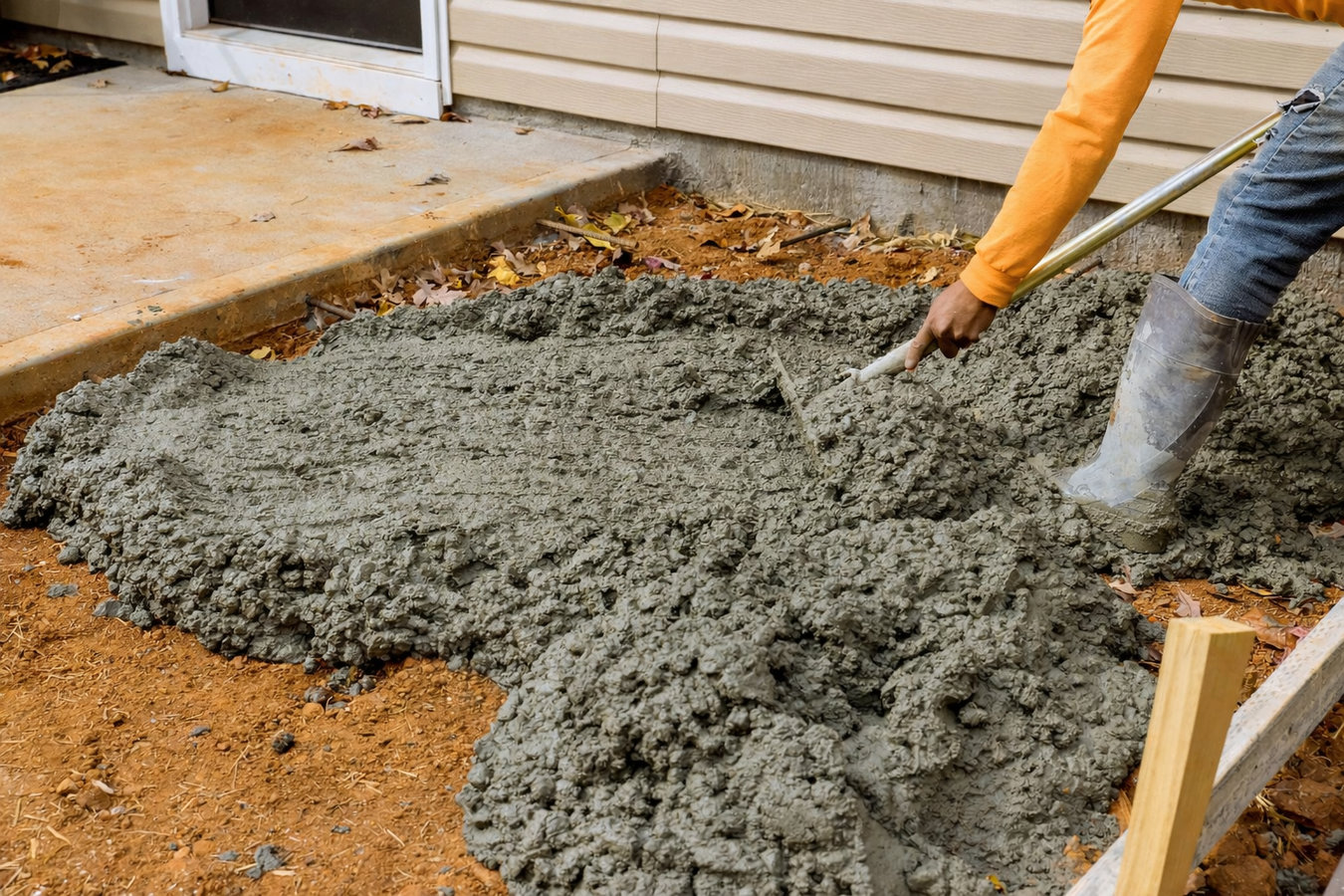
Sunken or tilted concrete is more than an eyesore. It sends water toward your home and gets worse every winter. We lift it back and fix the drainage.
Foundation raising in Manchester, CT lifts sunken or uneven concrete back to its original level using foam or slurry pumped through small drilled holes, most jobs complete in a single day without tearing out the existing slab.
Manchester winters are hard on concrete. Repeated freezing and thawing forces water under slabs, creates voids, and lets sections drop over time. The older the home, the more settlement cycles it has been through. If you have noticed a gap between your front steps and the house, doors that started sticking after a harsh winter, or a driveway slope that now sends water toward the garage, those are signs the ground has shifted. Foundation raising addresses the symptom and, when paired with drainage corrections, helps prevent it from coming back.
Many homeowners who call about foundation raising also end up asking about slab foundation building for areas where the concrete is too deteriorated to lift. We can assess both during the same visit and give you an honest recommendation.
When a foundation shifts, door and window frames shift with it. If a door that swung freely now drags on the floor, or a window that opened easily now sticks, the frame has moved because the slab below it has dropped. In Manchester homes, this symptom appears most often in spring after the ground has gone through a winter of freezing and thawing.
Walk around the outside of your home and look where concrete meets the foundation wall, front steps, or garage floor. A gap that was not there before - or one that seems to be growing - means the slab has dropped away from a fixed point. Even a half-inch gap can let water in and will typically grow larger over time.
Place a ball on your floor and watch whether it rolls on its own. If floors feel noticeably sloped or uneven - especially in a basement or on a ground-level slab - that is worth having assessed. In older Manchester homes built on clay-heavy soil, floor settlement is common and often correctable without major reconstruction.
If rainwater consistently collects against your foundation wall or in a low spot on your driveway, that water is working its way underneath the slab. Over time it erodes the soil support and accelerates settling. This is especially common in Manchester neighborhoods where original grading has shifted as landscaping and tree roots matured over decades.
We handle residential foundation raising using two proven methods: expanding polyurethane foam and cement-based slurry. Foam cures in about 15 minutes and is lighter on soft soils, which makes it a strong choice when you need the area back in use quickly. Slurry works well for larger voids and can be more cost-effective on bigger projects. We also address the drainage and grading issues that cause slabs to sink in the first place - because lifting a slab without fixing the water problem often means lifting it again a few years later.
For concrete that is too cracked or deteriorated to lift successfully, we can transition to concrete cutting and removal, followed by a fresh pour. If your project involves a new addition or structure, we also provide slab foundation building as a complete solution. We scope the right answer during the estimate and explain our reasoning before any work is scheduled.
Suits homeowners who need fast turnaround and have softer soils or smaller voids - cures in 15 minutes.
Suits projects with larger voids or where cost is the primary concern - strong, proven method for many residential applications.
Suits homeowners whose slab is sinking because water runs toward the foundation instead of away from it.
Suits slabs that are too deteriorated or cracked to be lifted safely - a clean slate for a new pour.
Manchester sits in Hartford County, where winters regularly bring temperatures that dip well below freezing and then climb back above it - sometimes multiple times in a single week. Every freeze-thaw cycle forces moisture under slabs, expands it, and then melts it away, leaving a slightly larger void each time. Over 10 or 20 years in a Manchester home, that cycle is one of the most common reasons foundations and slabs gradually sink. The older housing stock adds to the problem: many homes built between the 1940s and 1970s were constructed on soils that were not engineered to modern standards, and their drainage and grading has often changed as landscaping matured around them.
Much of central Connecticut - including Manchester and the surrounding areas - has clay-heavy soils that expand when wet and contract when dry, putting repeated stress on anything sitting above them. This is different from sandy soils that simply wash away; clay can push a slab up in wet seasons and let it drop in dry ones. Homeowners in Glastonbury and South Windsor face similar soil conditions, and we regularly handle foundation raising work across the Hartford County region. The Town of Manchester Building Department requires permits for structural foundation work - we pull those on your behalf so you do not have to navigate that process yourself.
We ask a few basic questions about where the problem is and how long you have noticed it. You will hear back within one business day to set up an on-site visit - no preparation needed on your end.
We walk the affected area, check the level of the slab, look at surrounding drainage, and assess whether the concrete is sound enough to lift. A written estimate follows within a day or two - no obligation, no pressure.
For structural foundation work in Manchester, a building permit is typically required. We handle pulling it from the Town of Manchester Building Department on your behalf, then confirm a work date once it is in hand.
The crew drills small holes, pumps the lifting material until the slab reaches the correct level, and patches the holes before leaving. We walk you through the finished result and tell you what to watch for over the next few months.
Free estimate, no obligation. We respond within one business day.
(860) 730-0709We understand how Manchester and Hartford County soils behave through freeze-thaw cycles and seasonal moisture changes. That local knowledge shapes every recommendation we make - from the lifting method to whether drainage corrections are needed alongside the lift.
Foundation raising in Manchester requires a building permit for structural work. We pull the permit, coordinate the inspection, and keep you informed throughout. You do not have to deal with the town office or figure out which forms to file. Town of Manchester Building Department
Not every settled slab is a good candidate for lifting. If the concrete is too cracked or deteriorated to hold, we will tell you that clearly and explain what a replacement would involve. We will not lift a slab that is not going to hold just to close a job.
When foam lifting is the right method for your slab, the material cures in about 15 minutes, meaning you can walk on the surface the same afternoon. For homeowners who cannot have an area out of service for days, that turnaround makes a real practical difference.
Every job we take on in Manchester starts with an honest conversation about what the concrete actually needs. We back that commitment with proper permits, licensed work, and a clear explanation of what was done and why.
When a settled slab is too deteriorated to lift, precise cutting removes the damaged section cleanly so a fresh pour can follow.
Learn MoreNew slab construction for additions, sheds, or areas where the existing concrete cannot be salvaged through lifting.
Learn MoreSpring is the busiest season for foundation work in Hartford County - call now to get on the schedule before slots fill up.